
Introduction
If you’ve ever stood in the skincare aisle staring at dozens of cleansers, serums, and moisturizers wondering where to start, you’re not alone.
These days, skincare can feel overwhelming. Social media is filled with influencers showing elaborate 10-step routines, while beauty brands constantly launch new products that promise instant results. It’s easy to feel like you’re missing out if your bathroom shelf isn’t packed with the latest skincare trends.
But here’s something many people discover after years of trial and error: healthy skin isn’t built through complicated routines—it’s built through consistency.
In fact, some of the healthiest, happiest skin comes from a simple routine that you can realistically stick to every day.
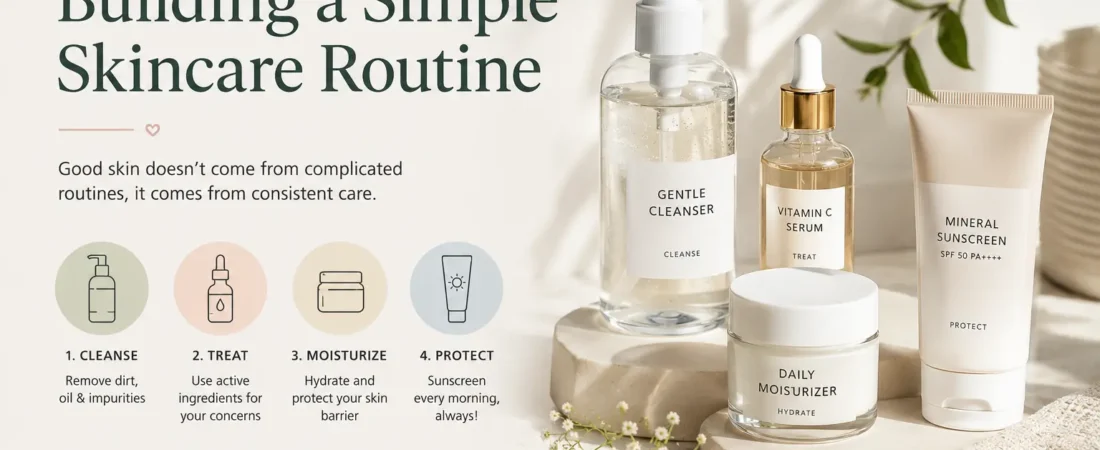
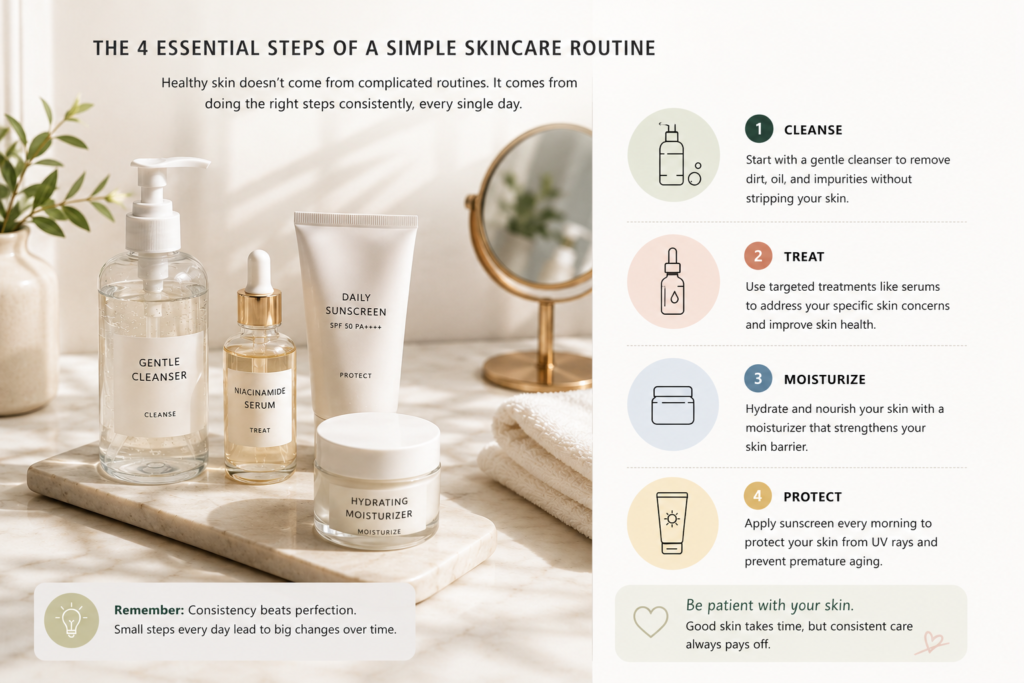
Whether you’re completely new to skincare or looking to simplify an overloaded routine, this guide will walk you through the essential steps you actually need and help you build a routine that works for your skin—not someone else’s.
Step 1: Start with a Gentle Cleanser
Think of cleansing as pressing the reset button for your skin.
Throughout the day, your skin collects sweat, oil, sunscreen, makeup, dirt, and environmental pollutants. A good cleanser removes these impurities and gives your skin a fresh start without stripping away the moisture it needs.
One mistake many beginners make is choosing a cleanser that leaves their skin feeling squeaky clean. While that tight feeling might seem satisfying, it’s often a sign that your skin barrier has been stripped of its natural oils.
What to Look For
- Gentle, non-stripping formulas
- Fragrance-free options if you have sensitive skin
- Hydrating ingredients such as glycerin or ceramides
Avoid
- Harsh soaps
- Over-cleansing
- Products that leave your skin feeling tight and dry
For most people, cleansing twice daily—morning and night—is enough. If your skin feels comfortable and balanced afterward, you’re on the right track.
Step 2: Moisturize Every Day
Let’s clear up one of the biggest skincare myths: moisturizers aren’t just for people with dry skin.
Even oily skin needs hydration.
Many people with oily or acne-prone skin skip moisturizer because they’re afraid it will make their skin greasier. Ironically, dehydrated skin can sometimes produce even more oil to compensate for the lack of moisture.
A moisturizer helps strengthen your skin barrier, lock in hydration, and protect your skin from everyday stressors.
For Dry Skin
Choose richer creams with ingredients like:
- Hyaluronic acid
- Ceramides
- Shea butter
For Oily Skin
Look for:
- Lightweight gel moisturizers
- Non-comedogenic formulas
- Oil-free products
The goal isn’t to make your skin feel heavy or greasy—it’s to keep it comfortable, balanced, and healthy.
Step 3: Never Skip Sunscreen
If there is one skincare habit that can make the biggest difference over time, it’s wearing sunscreen.
We know—it isn’t the most exciting product in your routine.
Most people don’t notice immediate results from sunscreen the way they might from a brightening serum or a hydrating moisturizer. But sunscreen is quietly protecting your skin every single day.
Sun exposure contributes to:
- Premature aging
- Dark spots
- Uneven skin tone
- Loss of skin elasticity
- Increased risk of skin cancer
Think of sunscreen as an investment in your future skin. The protection you give your skin today can help prevent problems years down the road.
How to Choose a Sunscreen
- SPF 30 or higher
- Broad-spectrum protection
- Comfortable formula you’ll wear daily
Because the best sunscreen isn’t necessarily the most expensive one—it’s the one you’ll actually use every day.
Step 4: Introduce Treatment Products Slowly
Once you’ve built a solid foundation with cleansing, moisturizing, and sunscreen, you can begin adding products that target specific concerns.
This is often where beginners get excited—and understandably so.
You hear about Vitamin C for glow, retinol for anti-aging, niacinamide for pores, and salicylic acid for acne. Suddenly, it feels like you need everything at once.
The reality is that your skin prefers a slower approach.
Vitamin C
Helps brighten skin and support a more even complexion.
Niacinamide
Supports the skin barrier and helps manage excess oil.
Retinol
Promotes cell turnover and helps reduce the appearance of fine lines.
Salicylic Acid
Useful for oily and acne-prone skin.
Introduce only one new treatment at a time and give it several weeks before deciding whether it’s working. This makes it easier to identify what’s helping—and prevents unnecessary irritation.
Understanding Your Skin Type
One of the most helpful things you can do for your skin is learn how to listen to it.
Your skin often tells you what it needs—you just have to pay attention.
Dry Skin
Feels tight, rough, or flaky.
Oily Skin
Produces excess shine, particularly in the T-zone.
Combination Skin
Oily in some areas and dry in others.
Sensitive Skin
Prone to irritation, redness, or discomfort.
It’s also important to remember that your skin isn’t static. Weather changes, stress levels, hormones, sleep habits, and even your environment can influence how your skin behaves.
The routine that works for you in winter may need adjustments during summer—and that’s completely normal.
Common Skincare Mistakes to Avoid
Even the best products can’t deliver results if they’re used incorrectly.
Some of the most common skincare mistakes include:
- Using too many products at once
- Over-exfoliating
- Sleeping with makeup on
- Frequently switching products
- Skipping sunscreen
- Expecting overnight results
Perhaps the biggest mistake of all is comparing your skin to someone else’s.
Everyone’s skin is unique, and what works perfectly for one person may not work for another.
The Importance of Patience
If there’s one lesson almost every skincare enthusiast learns eventually, it’s this: good skin takes time.
In a world of instant results, skincare can feel frustrating. You start a new product and find yourself checking the mirror every morning hoping for dramatic changes.
But skin doesn’t work that way.
Most products require weeks—or even months—of consistent use before visible improvements appear. That’s why patience is one of the most underrated skincare skills.
Focus on progress, not perfection.
Small improvements add up over time, and consistency will almost always outperform quick fixes.
Final Thoughts
A good skincare routine doesn’t have to be complicated.
For most beginners, a gentle cleanser, a moisturizer, and a daily sunscreen provide everything needed to build a strong foundation for healthy skin.
As you learn more about your skin, you can gradually introduce targeted treatments and refine your routine. But remember: skincare isn’t a race, and it’s certainly not about achieving perfection.
At GlowTheory, we believe skincare is about understanding your skin, making informed choices, and building habits that fit into real life.
Because healthy, glowing skin isn’t created overnight. It’s built through patience, consistency, self-care, and a little bit of kindness toward yourself along the way.