Stop Believing Everything You See Online
The skincare industry is full of advice, hacks, and miracle solutions promising flawless skin overnight. Scroll through social media for a few minutes, and you’ll likely encounter countless skincare tips claiming to be the secret to clear, glowing skin.
The problem? Not all skincare advice is accurate.
In fact, many popular skincare myths can do more harm than good, leading to irritation, breakouts, dryness, and disappointment. Understanding what’s fact and what’s fiction is one of the best things you can do for your skin.
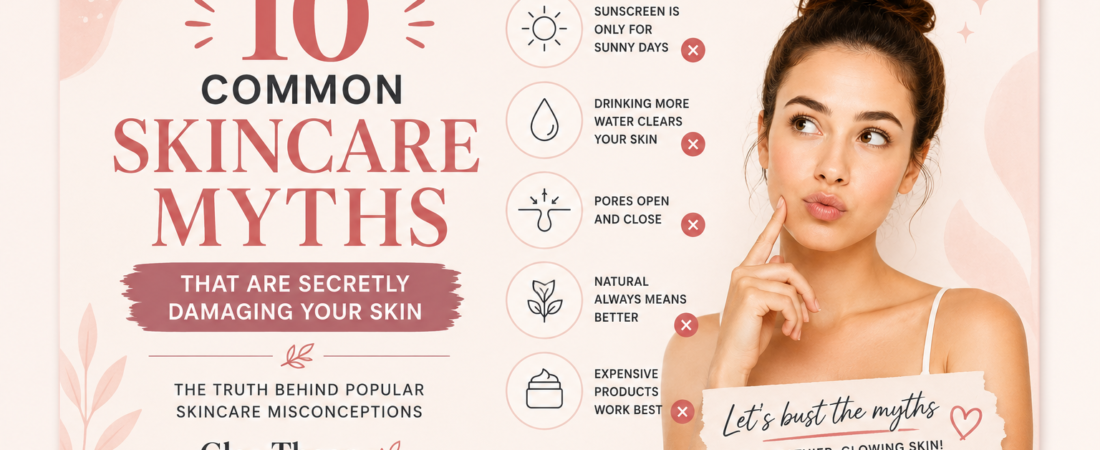
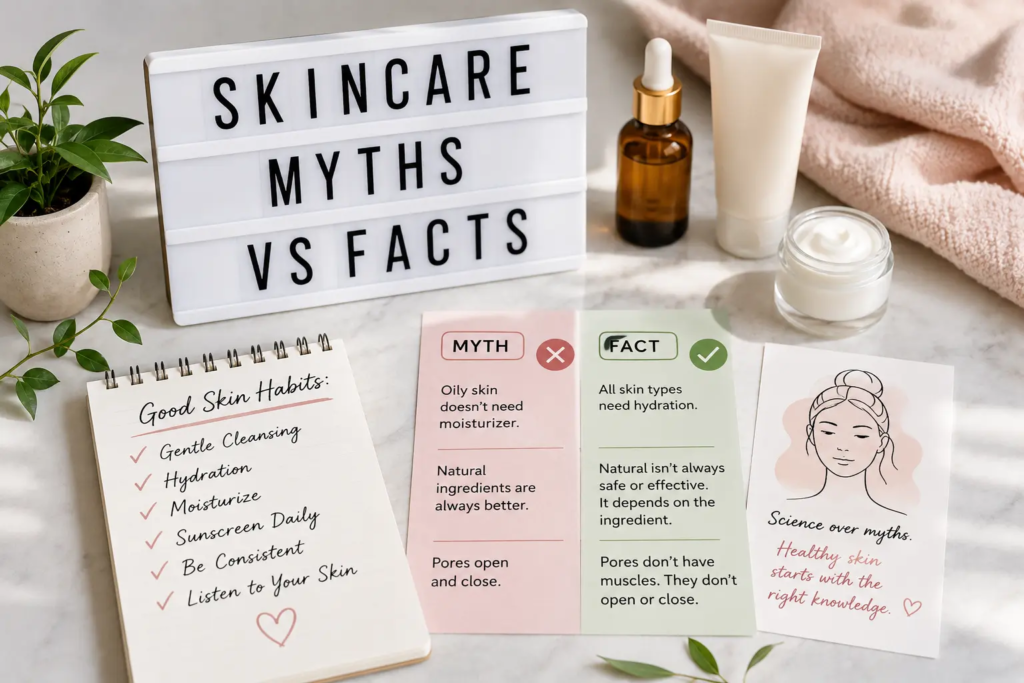
In this guide, we’ll debunk 10 common skincare myths and reveal the science-backed truth behind healthier, happier skin.
Myth #1: Oily Skin Doesn’t Need Moisturizer
The Truth
This is one of the most widespread skincare misconceptions.
Many people with oily skin avoid moisturizer because they’re afraid it will make their skin greasier. However, when your skin becomes dehydrated, it may produce even more oil to compensate for the lack of moisture.
A lightweight, non-comedogenic moisturizer can actually help balance oil production and support a healthy skin barrier.
What to Do Instead
Choose a gel-based or oil-free moisturizer that hydrates without feeling heavy.
Myth #2: You Only Need Sunscreen on Sunny Days
The Truth
UV rays don’t disappear when clouds appear.
Even on cloudy days, ultraviolet radiation can reach your skin and contribute to premature aging, hyperpigmentation, and long-term skin damage.
Many people also forget that UV rays can penetrate windows, meaning indoor exposure still matters.
What to Do Instead
Apply a broad-spectrum sunscreen with SPF 30 or higher every morning, regardless of the weather.
Myth #3: Drinking More Water Will Cure Dry Skin
The Truth
Hydration is important for overall health, but drinking extra water won’t magically eliminate dry skin.
Dry skin is often caused by factors such as:
- Genetics
- Weather conditions
- Skin barrier damage
- Aging
- Harsh skincare products
While proper hydration supports your body, topical skincare products play a much larger role in maintaining skin moisture.
What to Do Instead
Use moisturizers containing ingredients like hyaluronic acid, glycerin, and ceramides.
Myth #4: Natural Ingredients Are Always Better
The Truth
The word “natural” has become a powerful marketing term, but natural doesn’t automatically mean safe or effective.
Many natural ingredients can cause irritation or allergic reactions. On the other hand, scientifically formulated ingredients often undergo extensive testing for safety and effectiveness.
What to Do Instead
Focus on ingredients supported by research rather than choosing products simply because they’re labeled natural.
Myth #5: Pores Open and Close
The Truth
Contrary to popular belief, pores don’t have muscles.
That means they cannot physically open or close.
Warm water or steam may temporarily soften debris inside pores, while cold water may reduce swelling, making pores appear smaller. However, these effects are temporary.
What to Do Instead
Keep pores clear with gentle cleansing and regular exfoliation instead of trying to “open” or “close” them.
Myth #6: Acne Is Caused by Dirty Skin
The Truth
Acne is a complex skin condition influenced by:
- Hormones
- Genetics
- Inflammation
- Excess oil production
- Clogged pores
Scrubbing your face aggressively or washing it multiple times a day won’t necessarily clear acne and may actually worsen irritation.
What to Do Instead
Cleanse gently twice daily and use acne treatments specifically designed to address the underlying causes of breakouts.
Myth #7: Scrubbing Harder Means Cleaner Skin
The Truth
Your skin doesn’t need aggressive scrubbing to stay healthy.
Harsh exfoliation can damage the skin barrier, increase sensitivity, and trigger inflammation.
Many people mistake irritation for effectiveness when it comes to exfoliation.
What to Do Instead
Choose gentle exfoliating products and avoid over-exfoliating. For most people, one to three times per week is enough.
Myth #8: Expensive Skincare Products Work Better
The Truth
A higher price tag doesn’t guarantee better results.
Many affordable skincare products contain the same active ingredients found in luxury brands.
What matters most is:
- Ingredient quality
- Product formulation
- Consistency of use
What to Do Instead
Learn to read ingredient lists and focus on proven ingredients rather than packaging or brand prestige.
Myth #9: You Need a 10-Step Routine for Healthy Skin
The Truth
While elaborate skincare routines can be enjoyable, they’re not necessary for everyone.
In fact, too many products can increase the risk of irritation and make it difficult to identify what’s helping or hurting your skin.
What to Do Instead
Start with the essentials:
- Gentle cleanser
- Moisturizer
- Sunscreen
- One targeted treatment product
Consistency beats complexity every time.
Myth #10: If a Product Burns, It’s Working
The Truth
Many people assume that tingling, burning, or stinging means a product is actively improving their skin.
In reality, persistent burning often indicates irritation.
While certain active ingredients may cause mild temporary sensations, discomfort should never be severe or ongoing.
What to Do Instead
Pay attention to your skin’s response. If a product consistently causes redness, burning, or irritation, stop using it and reassess your routine.
How to Spot Skincare Misinformation Online
With so much skincare content available online, it’s important to evaluate advice carefully.
Before following a skincare trend, ask yourself:
- Is the claim supported by scientific evidence?
- Is the source trustworthy?
- Does it sound too good to be true?
- Does it promise instant results?
- Is it recommended by skincare professionals?
Healthy skepticism can protect both your skin and your wallet.
Frequently Asked Questions (FAQs)
What is the biggest skincare myth?
One of the biggest skincare myths is that oily skin doesn’t need moisturizer. All skin types need hydration to maintain a healthy skin barrier.
Can drinking more water improve my skin?
Proper hydration supports overall health, but it isn’t a cure for dry skin, acne, or other skin concerns. A good skincare routine remains essential.
Do expensive skincare products work better?
Not always. Effectiveness depends on ingredients and formulation rather than price.
Is sunscreen necessary every day?
Yes. Daily sunscreen use helps protect against sun damage, premature aging, and hyperpigmentation.
Can natural ingredients irritate the skin?
Absolutely. Natural ingredients can still cause allergic reactions or sensitivity in some individuals.
How often should I exfoliate?
Most people benefit from exfoliating one to three times per week, depending on their skin type and the product being used.
Why does my skin feel worse after trying a new product?
Your skin may be reacting to an ingredient, experiencing irritation, or adjusting to an active ingredient. Introduce new products gradually.
How long does it take to see skincare results?
Most skincare products require consistent use for four to twelve weeks before significant results become noticeable.
The Bottom Line
The world of skincare is filled with myths, trends, and misinformation that can make achieving healthy skin feel confusing.
The truth is that good skincare doesn’t require miracle products, expensive routines, or viral hacks. It requires understanding your skin, using evidence-based ingredients, and staying consistent with healthy habits.
When it comes to skincare, knowledge is just as important as the products you use.
At GlowTheory, our mission is to help you cut through the noise and make informed decisions that support healthy, glowing skin for the long term.