There was a time when rice was something you thought about at breakfast or dinner.
Now, you can find it in skincare aisles everywhere—rice toner, rice essence, rice serum, rice moisturizer, fermented rice extract and even rice-based masks.
And if you’ve spent any time watching Korean skincare routines online, you’ve probably heard about rice skincare and its connection with smooth, hydrated, glowing-looking skin.
But here’s the question that matters:
Does rice skincare actually work, or is it simply another beauty trend?
The answer is a little more interesting than either a simple yes or no.
Rice-derived ingredients have been used in beauty traditions for generations, and modern research has identified potentially useful compounds in rice and rice bran, including antioxidants and other skin-conditioning components. But “rice skincare” covers a surprisingly wide range of ingredients, and a rice toner isn’t automatically going to fix pigmentation, acne or every other skin concern.
So before you buy the prettiest rice essence on your feed, let’s look at what rice skincare actually is, what it can realistically do, how rice water differs from rice extract, and how to use rice-based products without turning your routine into a 10-step experiment.
What Is Rice Skincare?
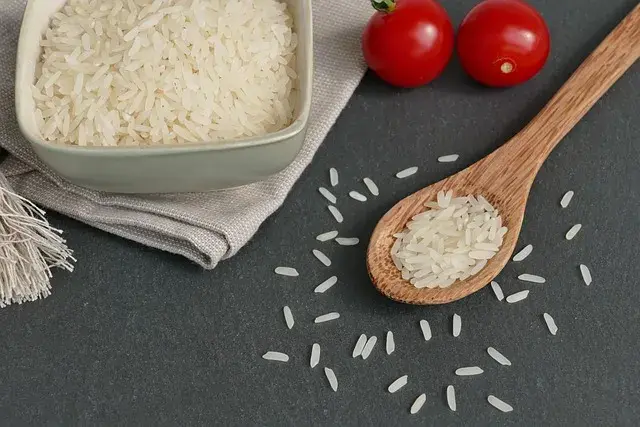
Rice skincare refers to cosmetic products that contain ingredients derived from rice.
Depending on the product, that could include:
- Rice extract
- Rice water
- Rice bran extract
- Rice bran oil
- Fermented rice extract
- Rice starch
- Other compounds derived from rice
And this distinction matters.
Rice water and rice extract are not the same ingredient.
Rice water is generally made by soaking or otherwise processing rice with water, while cosmetic rice extracts are produced through controlled extraction and formulation processes.
Rice bran is also particularly interesting because the outer layer of the rice grain contains compounds such as ferulic acid, tocopherols, tocotrienols, phytosterols and γ-oryzanol.
Research has investigated rice-derived ingredients for antioxidant, moisturizing, anti-inflammatory and skin-conditioning properties.
That’s one reason rice has moved from traditional beauty rituals into modern skincare formulations.
Why Is Rice Skincare So Popular Right Now?
The popularity of rice skincare isn’t happening in isolation.
Korean beauty has played a huge role in bringing rice-based products into the mainstream, particularly through the popularity of bright, hydrated and dewy-looking skin. But there’s another trend happening at the same time.
People are becoming more interested in gentle skincare.
After years of aggressive exfoliation and stacking multiple active ingredients, many skincare users are looking for routines that focus more on hydration and maintaining a comfortable skin barrier.
Rice-based products fit nicely into that approach.
They aren’t usually marketed as aggressive exfoliants or powerful acne treatments. Instead, they’re commonly positioned as hydrating, soothing and brightening additions to a routine.
And that’s probably the better way to look at them. Not as a miracle. Not as a replacement for every active ingredient.
Just as one potentially useful part of a well-formulated routine.
Rice Skincare Benefits: What Can Rice Actually Do for Your Skin?
Let’s get past the vague promise of “glowing skin” and look at the potential benefits more realistically.
1. Rice Ingredients May Help Support Skin Hydration
If your skin regularly feels tight after cleansing, looks flaky or simply doesn’t feel comfortable, hydration is probably a more useful goal than chasing the latest powerful active.
Rice-derived ingredients have demonstrated moisturizing and skin-conditioning potential in research. But there’s an important detail here. The benefit doesn’t necessarily come from rice alone.
A finished skincare product contains multiple ingredients, and its performance depends on the entire formulation. So if a rice essence leaves your skin soft and comfortable, that’s great.
But don’t assume that adding plain rice water to your face will automatically produce the same result.
2. Rice Skincare May Help Skin Look Brighter
“Brightening” is one of the biggest claims you’ll see around rice skincare.
But brightening should not be confused with changing your natural skin color.
What most people actually want is skin that looks:
- More even
- Less dull
- More hydrated
- Fresher
- More luminous
Rice-derived compounds have antioxidant potential and have been investigated for their effects on pigmentation-related pathways.
That makes rice an interesting supporting ingredient.
But if you’re dealing with persistent hyperpigmentation or dark marks, don’t expect a rice toner to replace targeted treatment.
And definitely don’t replace sunscreen with it.
3. Rice Bran Contains Antioxidant Compounds
Rice bran is one of the more scientifically interesting parts of the rice grain.
It contains several biologically active compounds, including vitamin E-related compounds and other antioxidants.
Antioxidants are useful in skincare because oxidative stress can contribute to skin damage and visible signs of aging.
This doesn’t mean that applying rice bran extract will suddenly reverse wrinkles. It means that rice-derived antioxidants can be a useful component of a broader skincare formulation.
That distinction may not sound exciting. But it’s much more useful than promising overnight transformation.
4. Fermented Rice Is an Interesting Area of Skincare Research
If you’ve noticed the phrase “fermented rice” appearing more often on skincare labels, you’re not imagining it.
Fermentation has become a major theme in modern skincare, and rice is one of the ingredients being explored through this process.
Researchers are investigating whether fermentation can alter the composition of rice-derived ingredients and potentially make certain compounds more biologically useful.
A recent study on fermented rice bran extract reported promising results related to skin hydration, collagen- and elastin-related activity and water loss—but importantly, much of this evidence came from laboratory and animal research rather than large human clinical trials.
So fermented rice is promising, but it isn’t yet a reason to believe every fermented-rice product has anti-aging superpowers.
Rice Water vs. Rice Extract: What’s the Difference?
This is one of the most searched—and most misunderstood—parts of rice skincare.
Rice water
Rice water is a water-based preparation made using rice. It has a long history in traditional beauty practices and became popular again through social media.
Rice extract
Rice extract is a cosmetic ingredient created through controlled extraction and formulation. It can contain specific compounds selected for their cosmetic properties.
Rice bran extract
Rice bran comes from the outer portion of the grain and contains a different collection of compounds.
Fermented rice extract
Fermentation changes the composition of the starting material and is being studied for potential additional cosmetic benefits.
So when someone says:
“Rice works for skin.”
The next question should really be:
Which rice ingredient, in what concentration, in what formulation, and for what skin concern?
That is where skincare gets more interesting.
Is DIY Rice Water Good for Your Face?
This is where I’d personally skip the kitchen experiment.
Making rice water sounds harmless enough.
Rice + water.
Done.
But skincare products aren’t simply about putting an ingredient on your face.
A professionally formulated product has to consider things such as:
- Preservation
- Microbial contamination
- Stability
- pH
- Ingredient compatibility
- Packaging
- Consistency of the formula
Homemade rice water doesn’t give you that same level of control.
And because you’re putting it directly onto your face, “homemade” doesn’t automatically mean “better.”
If you enjoy traditional beauty rituals, that’s one thing. But for regular skincare, I’d rather use a properly formulated rice-based product than keep a homemade mixture sitting around and hope it remains safe and stable.
Can Rice Skincare Help Acne?
This is another area where skincare marketing can get ahead of the evidence.
Rice is not an acne treatment.
A rice-based product may work perfectly well in an acne-prone routine if you like the formulation and it doesn’t irritate or clog your skin.
But don’t buy a rice serum expecting it to replace established acne treatments.
If your main concern is acne, your routine should be built around ingredients and treatments appropriate for acne—not around whatever ingredient happens to be trending on social media.
Rice can be the supporting actor. It doesn’t have to be the main character.
Is Rice Skincare Good for Sensitive Skin?
Potentially—but don’t assume that “rice” automatically means “safe for sensitive skin.”
This is one of those skincare myths that sounds logical but isn’t quite that simple.
A product can contain a gentle-sounding ingredient and still contain fragrances, preservatives or other components that don’t agree with your skin.
If your skin is easily irritated, look at the whole formula, not just the hero ingredient printed on the front of the package.
And when trying something new, introduce it gradually rather than changing your entire routine at once.
That way, if your skin doesn’t like it, you’ll have a much better idea of what caused the problem.
How to Add Rice Skincare to Your Routine
You don’t need a complicated routine to enjoy rice-based skincare.
In fact, I’d recommend the opposite.
Morning
Cleanser → Rice essence/serum → Moisturizer → Sunscreen
Evening
Cleanser → Rice essence/serum → Moisturizer
That’s enough for most people who simply want to experiment with a rice-based hydrating product.
If you’re already using a retinoid, exfoliating acid or acne treatment, you don’t need to throw everything away and start a “rice routine.”
Add the rice product where it makes sense. Don’t collect ingredients just because they’re trending.
How to Choose a Rice Skincare Product
Here’s the part I’d pay the most attention to when shopping. Don’t buy a product simply because the packaging says RICE in giant letters.
Instead, ask yourself:
What am I actually trying to improve?
If your answer is hydration, look for a formula designed around hydration.
If it’s dull-looking skin, look for a product with ingredients that support that goal.
If it’s pigmentation, don’t rely on rice alone.
If it’s acne, look for proven acne-focused ingredients.
The rice ingredient can complement the formula, but it shouldn’t distract you from what your skin actually needs.
What Results Should You Expect From Rice Skincare?
This is where realistic expectations make all the difference.
After using a hydrating rice product, your skin may feel:
- Softer
- More comfortable
- Less dry
- More hydrated
- Smoother-looking
You may also notice a temporary increase in that healthy, dewy appearance that comes with better hydration.
But don’t expect one bottle to:
- Erase acne
- Remove deep pigmentation
- Permanently shrink pores
- Transform your natural skin tone
- Reverse years of sun damage
- Give you flawless “glass skin”
Skincare works best when you stop expecting every product to perform five different jobs.
Rice Skincare and the “Glass Skin” Effect
The phrase glass skin has become almost inseparable from Korean skincare.
But there’s something worth remembering before you compare your skin with the perfectly dewy faces you see online.
Real skin has pores.
Real skin has texture.
Real skin sometimes looks dull.
Real skin gets blemishes.
Lighting, makeup, camera settings, filters and product layering can also dramatically change how skin looks in photographs and videos.
So if rice skincare gives you hydrated, comfortable, healthy-looking skin, that’s a worthwhile result.
You don’t need your face to look like glass.
Is Rice Skincare Worth Trying?
For the right reason, yes.
Rice-derived skincare ingredients are interesting because they combine a long history of traditional use with growing scientific interest in their antioxidant, moisturizing and skin-conditioning properties.
But the smartest way to approach the trend is not:
“Rice is popular, so I need a rice product.”
It’s:
“This product contains rice-derived ingredients, and its overall formula fits what my skin needs.”
That’s a much better buying decision.
Rice skincare can be a lovely addition to a simple routine, especially if you’re looking for hydration and a softer, more luminous appearance.
Just don’t let beautiful packaging or viral videos convince you that an ingredient has to be miraculous to be useful.
Sometimes a product that simply makes your skin feel comfortable is exactly the product worth keeping.
Frequently Asked Questions About Rice Skincare
Is rice skincare good for your skin?
Rice-derived ingredients can have moisturizing, antioxidant and skin-conditioning properties, depending on the specific ingredient and formulation. However, the benefits vary between rice water, rice extract, rice bran and fermented rice ingredients.
Can rice water brighten skin?
Rice-derived ingredients have been investigated for antioxidant and pigmentation-related effects, but homemade rice water should not be considered a proven treatment for hyperpigmentation. For persistent pigmentation, targeted skincare and daily sun protection are more appropriate.
Can I use rice water on my face every day?
There isn’t a strong reason to assume homemade rice water is necessary for daily skincare. A properly formulated rice-based cosmetic product is more predictable because it is designed with preservation, stability and skin compatibility in mind.
Is rice skincare good for sensitive skin?
It can be, but the word “rice” doesn’t guarantee that a product will suit sensitive skin. Check the complete ingredient list and introduce new products gradually.
Does rice skincare help acne?
Rice isn’t an established acne treatment. A rice-based product may fit into an acne-prone routine, but it shouldn’t replace evidence-based acne care.
Does rice skincare remove dark spots?
Don’t expect rice skincare alone to remove established dark spots. Rice-derived ingredients may have brightening potential, but pigmentation often requires a more targeted approach.
Is fermented rice better than regular rice extract?
Not necessarily. Fermented rice is an interesting area of research, but “fermented” doesn’t automatically mean more effective. The complete formulation and the evidence behind the specific product matter more.
How long does rice skincare take to work?
Hydration-related improvements may be noticeable relatively quickly, while changes in uneven-looking skin generally take longer. Results depend on the product, your skin and what you’re trying to improve.
Final Takeaway
Rice skincare is having a moment—and unlike some beauty trends, there’s a reasonable scientific basis for being interested in rice-derived ingredients.
But the smartest approach isn’t to chase the trend.
Understand the ingredient. Understand the formula. Understand your skin concern.
If you’re looking for hydration, a well-formulated rice essence or serum may be a lovely addition.
If you’re dealing with acne, choose acne-focused care.
If pigmentation is your concern, look beyond rice.
And whatever your routine looks like, don’t let a viral “glass skin” video convince you that healthy skin has to be poreless and perfect.
The best skincare routine isn’t necessarily the one with the most trending ingredients.
It’s the one your skin actually gets along with.